

Any Fringe show is hard to sell, as you are competing with over thousand shows every day. When your show is significantly different from all the other Fringe offerings, the success of it very much depends on the producer, on whether this uniqueness will become a hindrance or the main selling point. “Bare Threads”, a physical theatre piece did exceptionally well, not least due to great marketing. I had an opportunity to chat to the producer, Jennifer Jones, about organisation, marketing strategies and well-being during the festival season.
 Tell us a bit about the show you were working on this year
The show I worked on was a piece of devised physical theatre called ‘Bare Threads’ with Theatre Paradok. It explores the act of dressing and undressing in various scenarios and what our relationships with our clothes are under different circumstances.
Is producing a fringe show different from producing a term-time show
In some ways it’s similar in terms of what sort of jobs you’re doing during term time, but the way it works and the quantity of what you have to do is very different. So you will do the normal stuff like organising publicity, working on a budget, booking rehearsal space, contacting reviewers and general admin to get the bums on seats. But there is also liaising with the venue, filling safety forms, contacting the fringe office and printing lots of flyers and posters. There’s also way more little admin things that while quick to do are super important to getting things to run smoothly.
As a producer, what’s the biggest challenge during Fringe?
This was my first time doing it, so there were plenty of challenges and was a huge learning curve. However I think the biggest one is simply selling the show. You’re up against hundreds of other shows all happening at the same time, so you have to play to the show’s strengths and the things that make it stand out. You have to sell it to the student community as well as the general fringe audience during the run. However I think I got lucky with this one as it’s something so original there wasn’t a single show I saw quite like it, which made it easier to sell to the general fringe audience.
Do you have a favourite strategy for keeping everything organised?
Definitely a couple things I picked up during this show. One thing I have learned is to maximise face to face communication with your prod team and cast. Have a time each week where the team will come together and chat so everyone is on the same page. Plus getting stuff sorted is just way faster if you chat face to face and you can avoid miscommunication which happens a lot when just chatting over facebook.
For doing the jobs I was doing, writing to-do lists was essential as there are so many little jobs that add up if you leave them too late or forget to do them.
How do you establish effective communication between cast and crew?
Again, face to face over online always. Drop in on rehearsals and update the cast on what is happening. Having worked on both sides I think its easy for a cast to disregard the stuff the prod team are doing because they aren’t in rehearsals, so keep them in the loop on stuff. Make a facebook group together so you can message them quickly and efficiently if you need things like sizes for tee-shirts etc. Also arrange socials outside of rehearsal so you can get to know each other outside the rehearsal context.
With so many shows on at the same time, how do you make yours stand out?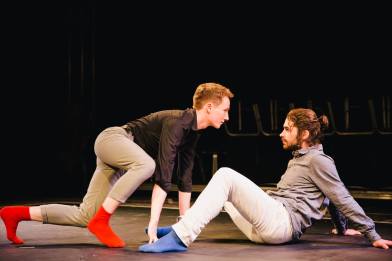
With ‘Bare Threads’ not only was it a piece of physical theatre which is novel in a festival full of comedies and original writing. It also didn’t fall into the trap of being too high concept or unfocused. It’s a piece about something we do every day and is performed in a way that people will be able to draw what they want to draw from it. It had comic and moving moments and is a perfect introduction to physical theatre. It was so easy to sell on the streets because it never takes itself too seriously. It’s such a quirky concept and yet expressed such profound truths about the relationship we have with our clothes.
So, Marion Bretagne and Andrew Perry’s combined efforts into the beautiful posters and flyers helped encapsulate that fun, intimate vibe. I think we got so lucky to have some super talented people helping with the job!
How do you deal with all the fringe stress?
On an ideal day I would eat as well as I could and exercise a couple times a week to work the stress off and stay healthy. Also I would try to go to bed early and get up early so I get a good night’s sleep and then have productive day. However that gets a lot less doable once fringe starts. So I tried the best I could to have a daily routine which helped to stop stress.
Also when things went wrong (which they did) I had to learn to apologise, fix things and move on without beating myself up too much about it (which is a hard one to balance sometimes). I think you have to accept it is never going to be a smooth run the whole way through which makes the little stressful things a bit easier to handle.
What’s the best thing about working on a fringe show? What’s the worst?
Best thing and worst thing is the unpredictability of it. Unlike during term time, people tend to decide on the day or the day before what they want to see. So on the one hand being a couple days before the show with only a handful of tickets gone is just a horribly stressful feeling. But then on the day when those sales shoot up and the audience is packed out (thanks to flyering, a charismatic cast, beautiful publicity and just people come to see it on a whim) that’s exhilarating and all the more satisfying.
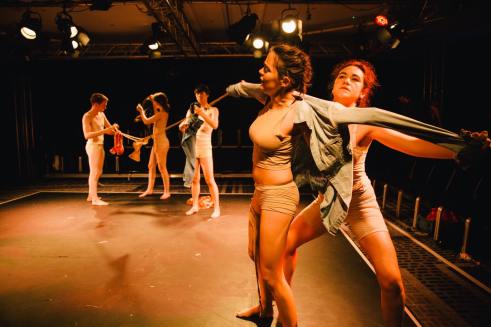
The Dress Run photos are by Andrew Perry and feature all of the cast members: Lucy Davidson, Adela Brianso, Maddie Haynes, Daniele Silvan, Trevor Lin, Tiffany Soirat and Cameron Banks.
Jen’s headshot is by Oliver Buchanan Photography.
 Theatre Machine