

I just finished directing The Nether by Jennifer Haley.
Directing this play has been my dream for the past three years and finally getting the chance to do it is almost unbelievable. This is one of the most powerful dramatic works I’ve ever come across. It deals with issues of censorship, morality and self-determination through raising questions that are uncomfortable, yet incredibly important in the modern world, where the internet is such a huge part of our life. Being the first production that brings The Nether to Scotland means that we had a chance to take part in creating and maintaining a vibrant, young and innovative theatre community here that is willing to deal with projects that are challenging in both their subject matter and technical aspects.
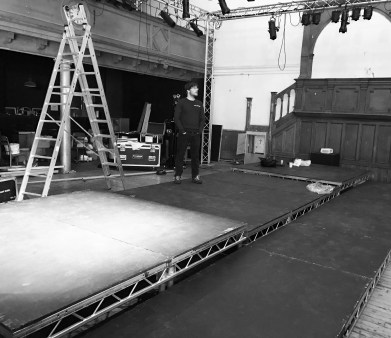
Looking back at it, I’ve been full-on working on this project at least from September (not counting the years I’ve spent swooning over the rights). Here are six things I learned to do/not do as a director.
Take time off. Actual time off.
I don’t mean read a course book or write an essay as you take a break from staring at the budget. I mean go and do something pointless and fun. When I was growing up I was always taught that rest should be switching from one kind of activity to another. Not always true. Seeing as directing is a constant switch between the creative and administrative parts of the job and there is no real downtime, you really need to find at least a few hours a week to do absolutely nothing productive. I personally like watching makeup tutorials and eating sushi, but find whatever feels right for you. Resting lets you refocus, clear your head and take a step back, making sure you don’t get overwhelmed and burnt out.
Plan more than you can possibly do, go with what you get.
Especially with student theater, time, space and finance always end up getting in the way of your great ideas. Although I imagine it works exactly the same way with professional companies. However, planning for more than you will be able to achieve stretches and flexes your creativity and even if you weren’t able to work all your/your team’s ideas in this time maybe one day you will be able to come back to them. Also, aiming high means that you are going for a high level of professionalism, and while you might not be able to get every single details in, the overall look of the production will reflect that.
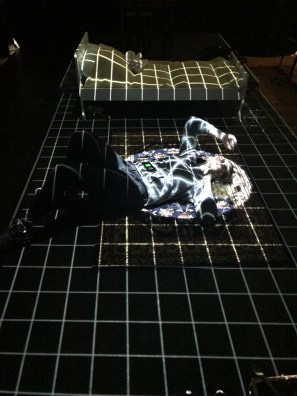
The second part of this is letting go of parts of the production that, for one reason or another, you couldn’t make work. When you start, you know that things will go wrong. But when something actually does it can be heart-breaking to see that something: a prop, a costume, a technical idea, that seemed like an integral part of the production didn’t end up making it in. However, getting hanged up on that could do a lot more damage than not having a certain something. Remember that a production looks very different to the audience, they never knew that X was meant to be part of it. But if you are obsessing over what you don’t have rather than working out the situation you are hindering the project, rather than helping it. Work with what you have and see where it takes you. You can never make a perfect production, but you can make a very, very good one.
Learn to express your thoughts. Clearly. Very clearly. Clearer.
The biggest part of the job is knowing how to express your thoughts well. Sometimes there is an semi-intonation or a fleeting feeling in a line of the script that you want to catch, and you know exactly what it is but finding words for it is so hard… Well, try your best to. I think it’s always better to say too much, to go back and correct yourself, rather than not say enough and not give the actors enough to work with. You can always change your opinion, if one of your actors offers a different perspective, for example, but you need to be the one who starts the discussion.

If it’s not working, come back later.
Don’t be afraid to say that you haven’t cracked a scene yet. It’s better to end a rehearsal early and think over what wasn’t working than torture your actors asking them to do a scene over and over again, while you are not sure what you want from it exactly and why it’s not working.
“I wasn’t ready”. And you never will be.
I wasn’t ready when I walked in for the English lit grant interview, I wasn’t ready for our first run through or our opening night. But what I really mean is I didn’t feel ready. I don’t think you can ever feel ready. Things keep happening and it always feels like there isn’t enough time. The best you can do is be as prepared as possible, and then just go with it.
Remember to enjoy it.
When it feels like everything is on fire and nothing is coming together step back and ask yourself why you are doing this in the first place. Keep constantly reminding yourself that you started working on this project because you love this play and you’d do anything to have the chance to stage it. The setbacks don’t matter. You are getting to work on it, that matters.

The beautiful dress run pics are by RCM Images
The gif at the end is by Erica Belton (our stage manager and an amazing photographe
All the others are just photos I took on my phone.
 Theatre Machine